


Chronic Illness: Causes, Examples and Long-Term Care
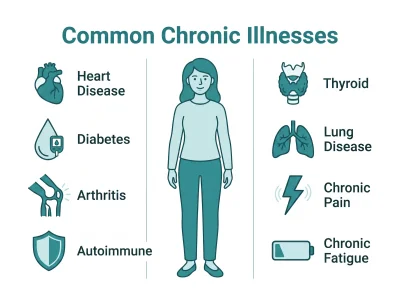
A chronic illness, or chronic disease, is a health problem that lasts a year or more and needs ongoing medical attention, limits daily activities or both. Examples include heart disease, diabetes, cancer, arthritis, autoimmune diseases, hypothyroidism and long-term pain. Three in four American adults have at least one, and over half have two or more. Many are linked to smoking, poor nutrition, physical inactivity and excessive alcohol use, and chronic inflammation plays a part in many of them. Long COVID is a newer long-term condition that follows COVID-19 infection. Ongoing care, regular activity and good nutrition help people live well with a long-term condition.

Your whole history, not one symptom
Care that works with your team
In person or virtual visits
What Is a Chronic Illness?
Chronic diseases are defined broadly as conditions that last 1 year or more and require ongoing medical attention, limit activities of daily living or both. A chronic illness is not something you get over in a week. It is part of daily life, often for years, and it can affect work, sleep, relationships and mood.
Heart disease, cancer and diabetes are the leading causes of death and disability in the United States and leading drivers of the nation’s $5.3 trillion in annual health care costs. For the specific conditions we see in our practice, visit our chronic conditions we treat page.
How Common Is Chronic Disease?
Very common. Three in four American adults have at least one chronic disease, and over half have two or more. More than 90% of adults 65 and older have at least one, along with more than 75% of adults ages 35 to 64 and 60% of adults ages 18 to 34.
Chronic Illness Examples
Long-term conditions come in many forms. Some of the most common examples are:
- Heart disease and high blood pressure
- Diabetes
- Cancer
- Arthritis and other long-term pain
- Autoimmune diseases
- Hypothyroidism
- Lung diseases such as asthma and COPD
- Epilepsy and multiple sclerosis
- Long COVID
Invisible Illness
Many long-term conditions cannot be seen from the outside. People with ME/CFS, for example, may not look sick but cannot do their normal activities, and long COVID symptoms can be difficult to explain or diagnose. Living with an invisible illness can be frustrating and isolating, especially when tests come back normal, which is why being heard and believed is part of good care. Our fibromyalgia and chronic fatigue syndrome page covers two of the most common invisible illnesses.
What Causes Chronic Illness?
Most preventable chronic diseases come from a short list of risk factors, and some groups are more affected than others because of where they are born, live, work and age.
Social Determinants of Health
Some groups are at higher risk of chronic diseases because of conditions where they are born, live, work and age. These nonmedical factors are called social determinants of health. Some communities lack safe spaces such as parks for physical activity or grocery stores that sell fresh fruits and vegetables. In some rural areas, it is hard to get medical care because of doctor shortages, hospital closures or long distances to care. These factors shape what is realistic for each person, so we keep them in mind when we plan your care.
Smoking, Nutrition, Activity and Alcohol
Cigarette smoking causes cancer, heart disease, stroke, lung diseases, diabetes and COPD. Poor nutrition and physical inactivity are significant risk factors for obesity, type 2 diabetes, heart disease, stroke, certain cancers and depression. Over time, excessive alcohol use is linked to high blood pressure, heart disease, stroke, liver disease and some kinds of cancer.
Chronic Inflammation
Inflammation is the body’s response to an illness, injury or something that does not belong, and normally it helps you heal. Chronic inflammation happens when the body keeps sending inflammatory cells even when there is no danger, and it can last for months or years. Its symptoms can be harder to spot and may include belly pain, chest pain, fatigue or insomnia, fever, joint pain or stiffness, mouth sores, a skin rash, depression or anxiety, digestive problems, weight changes and frequent infections. Chronic inflammation is involved in many conditions, including autoimmune diseases such as lupus and rheumatoid arthritis, heart disease, type 2 diabetes, some lung and bowel diseases and certain cancers.
Long COVID
Long COVID is a chronic condition that occurs after a COVID-19 infection and is present for at least 3 months. Fatigue, brain fog and post-exertional malaise are commonly reported, but more than 200 symptoms have been identified, including shortness of breath, heart palpitations, headaches, sleep problems, joint or muscle pain and changes in menstrual cycles. Symptoms can come and go and change over time. Long COVID is more common in women and in people who had severe COVID-19, and most people with Long COVID see significant improvement after 3 months, while others take months or years. There are no approved tests or treatments for it yet, so care focuses on the symptoms that affect daily life most.
Chronic Illness and Mental Health
People who have a chronic disease are at higher risk of depression, which can be triggered by the stress of the illness, brain changes from the disease, medicines or a personal or family history of depression. People who have both a long-term disease and depression tend to have more severe symptoms of both, and depression in turn raises the risk of heart disease, diabetes, stroke and pain. Treating both together matters.
Chronic Illnesses We Treat
These pages go deeper into long-term illnesses we see often. Each one covers symptoms, causes, testing and treatment, along with how we approach care at Renew.
Fibromyalgia & Chronic Fatigue Syndrome
Fibromyalgia causes pain and tenderness throughout the body, along with fatigue and trouble sleeping. ME/CFS causes severe fatigue that does not improve with rest and can get worse after activity.
Lyme Disease
Most Lyme disease is treated successfully with a few weeks of antibiotics, but some people have lingering fatigue, aches or trouble thinking afterward that can take months to improve.
Hashimoto's
Hashimoto’s disease is an autoimmune disorder in which the immune system attacks the thyroid. It is the most common cause of an underactive thyroid in the United States.
Chronic Disease Management
Living well with a long-term condition starts with the basics, done consistently:
- Follow your treatment plan. Take medicines as prescribed, at the right dose and time, and ask questions when instructions are unclear.
- Monitor your health at home when your plan calls for it, and report new or worsening symptoms early.
- Keep regular checkups so your plan can be adjusted as your health changes.
- Learn self-management skills. Self-management education programs teach you to manage symptoms, improve eating and sleeping habits and reduce stress.
- Stay active. Regular activity helps you feel, function and sleep better and improves mental health. If you are able, aim for at least 150 minutes of moderate activity a week plus 2 days of muscle-strengthening activity, and remember that some activity is better than none.
- Eat well and avoid smoking and excessive alcohol, the same habits that lower your risk in the first place.
Chronic Pain Management
Long-term pain is one of the hardest parts of many conditions. A growing body of evidence suggests that some complementary approaches may help manage some painful conditions, including acupuncture, hypnosis, massage, mindfulness meditation, music-based interventions, spinal manipulation, tai chi, qigong and yoga. Most of these have good safety records, but that does not mean they are risk-free, so it is worth talking them through with your provider and choosing options that fit your health and your goals.
How to Prevent Chronic Disease
The same habits that help you manage a condition also lower your risk of developing one. Stopping smoking, or never starting, lowers the risk of serious health problems. Eating healthy helps prevent, delay and manage heart disease, type 2 diabetes and other chronic diseases, and it helps to limit highly processed foods, added sugars, saturated fats and sodium. Aim for at least 150 minutes of moderate activity a week, limit alcohol and get at least 7 hours of sleep. Keep up with regular checkups and screenings, see a dentist at least once a year and share your family health history so problems can be caught early.


How We Care for Chronic Illness at Renew
Care at Renew Integrative Health starts with one question: why are you ill? We look for the underlying reasons behind your symptoms, including genetics, nutrition, stress, sleep, infections and environmental exposures, rather than treating each symptom on its own. Your first visit includes an extensive history, including family history, a physical examination and a review of past testing.
From there, we build a plan around what you can change and what needs treatment, with follow-up visits to adjust it as you go. We work alongside your other clinicians, not instead of them, so your care stays coordinated.
How to Prepare for Your Appointment
Before your first visit, complete your medical history, diet log and current symptoms through our patient portal, along with the previous two years of medical testing. A simple timeline of when your symptoms started and what has helped or made them worse is especially useful. We offer in-person visits at our Newark, Delaware office and virtual consultations across the United States.
Chronic Illness FAQs
What Counts as a Chronic Illness?
A chronic illness is a condition that lasts 1 year or more and needs ongoing medical attention, limits daily activities or both. Heart disease, diabetes, arthritis, autoimmune diseases and hypothyroidism are common examples.
What Are the Signs of Chronic Inflammation?
Chronic inflammation can be hard to spot. Possible signs include fatigue or insomnia, joint pain or stiffness, belly pain, digestive problems, a skin rash, mouth sores, weight changes, frequent infections and mood changes.
How Long Does Long COVID Last?
It varies. Most people with Long COVID see significant improvement after 3 months, while others may not improve until months or even years after symptoms first appear.
Can a Long-Term Illness Cause Depression?
Yes. People with a long-term disease are at higher risk of depression, and having both tends to make the symptoms of each more severe. If you are thinking about harming yourself, call or text 988.
Can Lifestyle Changes Help a Long-Term Condition?
Yes. Regular physical activity, good nutrition, enough sleep and avoiding smoking and excessive alcohol help manage many long-term conditions and prevent complications, alongside the treatment your condition needs.
Where Can I Find Chronic Illness Care Near Me?
Looking for help with a long-term illness near Newark, Delaware, or a virtual visit from anywhere in the United States? Our holistic medicine practitioner, Andrea Dean, CRNP, reviews your history, symptoms and testing and builds a plan around you.
Looking for care for a long-term illness in Newark, Delaware, or a virtual visit from anywhere in the United States? Our nurse practitioner can review your history, symptoms and past testing with you. Book your consultation below.